

Is your website languishing in the depths of search results, unseen by potential visitors? Understanding the nuances of keyword rankings could be the game-changer your digital marketing strategy needs. Keyword rankings, the positions your pages hold in organic search results, are vital for boosting your site’s visibility and driving traffic. These rankings are not just figures; they represent over half of all search result traffic, significantly impacting your site’s success. In this post, we’ll delve into the art of enhancing keyword rankings and explore the tools and strategies that can propel your organic traffic to new heights.
Understanding Keyword Rankings in SEO

Keyword rankings indicate a webpage’s position in organic search results for a specific query. They serve as a key measure of SEO success, impacting a website’s organic visibility and, consequently, its traffic flow.
Keyword rankings are pivotal for driving organic traffic and enhancing visibility. They account for over 53% of traffic in search results, underscoring their significance in attracting potential customers. Effective keyword ranking ensures a website’s presence in relevant search results, directing more users to the site and improving conversion rates. The higher a page ranks for a keyword, the more likely users are to click through, leading to increased engagement and potential revenue.
Factors that influence keyword rankings include:
- Content quality and relevance
- On-page SEO elements, such as keyword placement
- Off-page SEO, including backlink quality
- User experience, including page speed and mobile-friendliness
- Algorithm changes by search engines
Google’s algorithm is dynamic, with 729 updates reported in 2022 alone. These frequent updates can significantly impact keyword rankings, necessitating continuous monitoring and adaptation of SEO strategies. Websites must regularly update their content and SEO tactics to align with these changes, ensuring sustained visibility and performance in search results. Adapting to algorithm updates is crucial for maintaining competitive keyword rankings and optimising organic traffic success.
Tools for Tracking Keyword Rankings
Accurately tracking keyword rankings is essential for assessing the effectiveness of SEO strategies and ensuring optimal organic traffic. Utilising specialised tools allows businesses to monitor their performance, adjust tactics, and stay ahead of competitors in search engine results pages.
Semrush
Semrush’s Position Tracking tool is a powerful asset for monitoring keyword rankings. It enables users to track their website’s performance across multiple devices and locations. The tool provides detailed reports on visibility, estimated traffic, and ranking distribution. One of its standout features is the ability to compare rankings with competitors, offering insights into market positioning and strategy refinement. This comprehensive approach aids businesses in identifying opportunities for improvement and growth.
Ahrefs
Ahrefs offers a robust keyword rank checker that provides an in-depth analysis of keyword performance. In addition to tracking rankings, Ahrefs suggests related keywords and tracks their popularity. It also allows users to compare their rankings with those of competitors, delivering a competitive edge. Ahrefs’ extensive database and ability to evaluate backlink profiles further enhance its utility, making it a versatile tool for SEO professionals seeking to optimise their keyword strategies.
Google Search Console
Google Search Console is an invaluable, free tool for gaining insights into keyword performance. It provides crucial metrics such as click-through rates, impressions, and average positions for tracked keywords. By offering a clear view of how users interact with search results, Google Search Console helps businesses identify areas where improvements are needed. Its integration with other Google services and ease of use make it an essential component of any SEO toolkit.
| Tool | Key Features |
|---|---|
| Semrush | Position tracking, visibility reports, competitor analysis |
| Ahrefs | Keyword rank checking, related keyword suggestions, competitor comparison |
| Google Search Console | Click-through rate insights, average position tracking, integration options |
Improving Your Keyword Rankings
Optimisation is crucial for enhancing keyword rankings and boosting organic traffic. Effective keyword optimisation not only increases visibility in search engine results but also drives more targeted traffic to a website, improving engagement and conversion rates.
To improve keyword rankings, consider the following steps:
- Identify lower-difficulty keywords.
Lower-difficulty keywords are those with less competition, making it easier for your content to rank higher. By targeting these keywords, you increase the likelihood of obtaining top positions in search results. - Ensure content satisfies search intent.
Aligning your content with the user’s search intent is vital. This means understanding what users are looking for when they enter specific keywords and providing content that meets those needs effectively. - Provide more value than competitors.
Offering unique insights, comprehensive information, or additional resources can give your content a competitive edge. Users are more likely to engage with content that offers greater value, leading to improved rankings. - Strategically place keywords in titles and headers.
Keyword placement is critical in on-page SEO. Ensure that your primary keywords appear in strategic locations such as titles, headers, and meta descriptions to signal relevance to search engines. - Build high-quality backlinks.
Links from reputable sources enhance the credibility and authority of your content. Focus on acquiring backlinks from high-authority websites to strengthen your SEO efforts and improve rankings.
Content quality plays a pivotal role in keyword ranking improvements. Well-crafted, engaging, and error-free content resonates better with both users and search engine algorithms. When content is tailored to meet user intent and is optimised for search engines, it stands a better chance of achieving higher rankings. On-page SEO, including keyword placement, internal linking, and meta tag optimisation, complements content quality, creating a cohesive strategy for keyword ranking success.
Monitoring and Analysing Keyword Performance
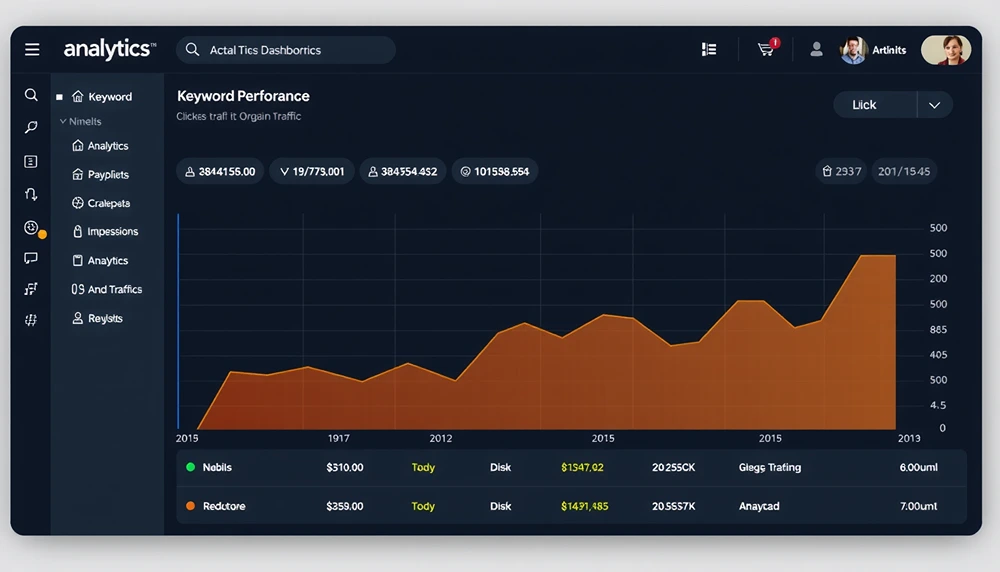
Regular monitoring of keyword performance is crucial in achieving SEO success. It allows businesses to understand how their content ranks in search engine results and identify areas for improvement. By tracking keyword performance, businesses can make informed decisions about their SEO strategies, ensuring they continue to meet the evolving demands of search engine algorithms. This proactive approach helps maintain and improve organic visibility, ultimately driving more targeted traffic to the website.
Tools such as Rank Math and Google Search Console are instrumental in this process. Rank Math, a comprehensive SEO tool, integrates with Google data to provide accurate insights into keyword performance. It offers detailed metrics such as average position history and click-through rates, allowing users to optimise their content effectively. Google Search Console, a powerful free tool, provides essential data on how users interact with search results, helping businesses refine their SEO tactics.
Key performance metrics to track include:
- Average position
- Durchklickrate (CTR)
- Impressions
- Number of clicks
By focusing on these metrics, businesses can better understand the effectiveness of their SEO efforts and make necessary adjustments to enhance their keyword rankings and organic traffic success.
Advanced Strategies for Keyword Ranking Success
In today’s competitive markets, sophisticated strategies are vital for achieving and maintaining high keyword rankings. Advanced tactics help businesses stand out in crowded digital spaces, ensuring they attract more organic traffic and enhance overall visibility.
Targeting Multiple Keywords
How can you optimise content for multiple keywords? By creating content that addresses various related keywords, businesses can maximise their reach and drive more traffic. This strategy leverages the fact that top-ranking pages often rank for multiple high-volume keywords, enhancing overall visibility and capturing a broader audience.
Using Data Analysis Tools
What role do tools like Ubersuggest play in keyword strategies? Ubersuggest and similar tools offer valuable insights into keyword performance, competition, and trends. These data-driven insights inform strategic decisions, allowing businesses to refine their approach and target optimal keywords with precision.
Optimising for Featured Snippets
Why aim for featured snippets in search results? Featured snippets offer prime visibility on search engine results pages (SERPs), often appearing at the top. Optimising content to answer common user queries effectively increases the chances of earning these coveted positions, driving significant traffic and establishing authority.
Employing these advanced strategies provides distinct advantages by capturing a wider audience and adapting to evolving search behaviours. By targeting multiple keywords, utilising data analysis tools, and optimising for featured snippets, businesses can enhance their keyword rankings and achieve more significant organic traffic success.
Recommended Tools: Spicy Pepper
Spicy Pepper stands out as a leading tool for tracking keyword rankings, praised for its intuitive interface and dependable data tracking capabilities. It offers a comprehensive suite of features that assist in keyword analysis and performance monitoring, making it an invaluable asset for SEO professionals seeking to optimise their strategies.
Key benefits of using Spicy Pepper include:
- User-friendly navigation that simplifies the process of tracking and analysing keywords.
- Robust data analytics that provide deep insights into keyword performance and trends.
- Reliable tracking capabilities that ensure accurate monitoring of keyword rankings over time.

Final Words
Understanding keyword rankings is vital for mastering SEO. Ranking well in search results boosts visibility, driving organic traffic. Google’s algorithm changes have significant effects, making ongoing monitoring essential. Effective tracking tools like Semrush, Ahrefs, and Google Search Console provide valuable insights into rankings. Improving rankings involves strategic keyword placement, quality content, and strong backlinks. Monitoring performance through tools like Rank Math ensures adjustments align with ranking goals. Advanced strategies, such as targeting multiple keywords and optimising for snippets, further enhance success. Using resources like Spicy Pepper can effectively track and improve keyword rankings, leading to continuous growth.
FAQ
How do you check keyword ranking?
To check keyword ranking, you use tools like Semrush and Google Search Console. These tools provide data on your website’s keywords, their positions, and performance over time.
What is a keyword ranking report?
A keyword ranking report is a document that tracks the position of selected keywords in search engine results. It helps in understanding visibility and planning SEO strategies.
What is a good keyword score?
A good keyword score varies but generally indicates a balance between search volume and competition. Effective keywords are those with moderate difficulty and high relevance to your content.
What is a good keyword difficulty ranking?
A good keyword difficulty ranking is typically one that signifies a moderate challenge to rank, with potential for high traffic and relevance. It allows targeting with achievable SEO efforts.
How can Google Search Console help with keyword rankings?
Google Search Console offers insights into average position, click-through rate, and impressions. It’s essential for assessing how keywords are performing and identifying areas for improvement.
