

Ever wondered why website visitors leave so soon? Time on page might hold the answer. In the fast-paced world of digital marketing, capturing and holding a user’s attention is like striking gold. Time on page, a crucial metric in understanding user engagement, offers insights into the quality of content and user experience. Discover how analysing this metric can enhance interactions, keep visitors glued to your site, and ultimately drive better SEO outcomes. Uncover the secrets to optimising user experience today.
What Is Time on Page: Enhance User Experience
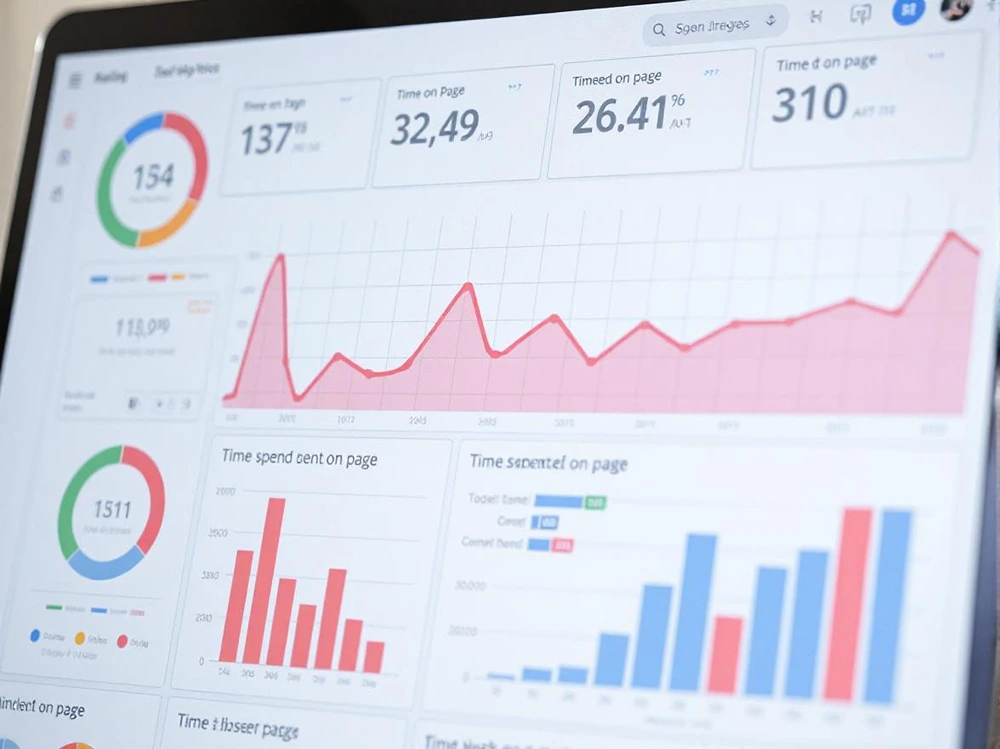
Time on page measures how long a user spends on a single page of a website. It is calculated by subtracting the time of the page load from the time the user navigates away to another page within the same site. This metric is vital for understanding user engagement and the quality of content. A higher time on page often indicates that visitors find the content valuable and engaging.
When asked, “How does time on page impact SEO?” the precision answer is: Time on page indirectly affects SEO by influencing user engagement metrics, which can signal to search engines the relevance and quality of content. Although not a direct ranking factor, it contributes to a site’s overall user experience, which search engines consider.
To enhance time on page:
- Create Engaging Content: Use compelling headlines, visuals, and interactive elements to capture interest.
- Improve Readability: Break up text with headings, bullet points, and images to make content digestible.
- Optimise Page Speed: Ensure fast loading times to prevent users from leaving prematurely.
- Use Internal Links: Encourage users to navigate to other relevant pages within the site.
By focusing on these strategies, websites can improve their time on page, thus enhancing user experience and potentially benefiting their SEO performance.
Final Words
Understanding what is time on page is crucial for evaluating user engagement and improving website performance.
By exploring the key factors that influence time on page, webmasters can implement strategies to enhance content quality and visitor interaction.
Employ techniques such as improving readability, incorporating multimedia, and optimising page speed to retain visitor attention.
Successful optimisation can lead to better user experience, higher engagement rates, and increased search rankings.
Stay proactive in measuring and adjusting your strategies for optimal results, creating a positive impact on overall website success.

FAQ
Q: How is precision calculated in a prediction model?
Precision is calculated by dividing the number of true positives by the sum of true positives and false positives.
Q: What does recall measure in data analysis?
Recall measures the proportion of true positives found compared to the total number of true positives.
Q: What does ‘tp’ stand for in prediction equations?
The letters ‘tp’ in prediction equations stand for true positives, indicating tokens shared between the correct answer and the prediction.
Q: How are false positives represented in data equations?
False positives are represented as ‘fp’ and account for tokens in the prediction but not in the correct answer.
Q: What is the significance of ‘fn’ in recall calculations?
The symbol ‘fn’ refers to false negatives and represents tokens in the correct answer but not in the prediction.
